

These are the people, the places, creations and things.
This is the A-Z of Hugh Carson Music:
0-9
01W/FD (Korg):
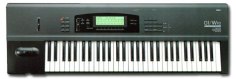
Though never actually owning one of these myself, this vintage synth was one that I had use of occasionally on projects during the 1990s.
0404 USB Audio Interface (E-MU):
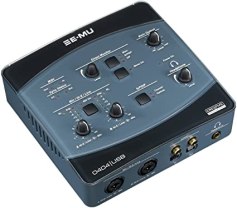
A bit plastic and flimsy in its build quality, but I used this little gadget pretty excessively for some on location film / audio purposes and it never let me down once. Not convinced of its long-term durability, mind, but it certainly served me well for a few years.
644 Midistudio (Tascam):
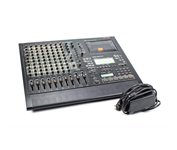
My university days fell during a strange sort of late analogue / early digital era. This Tascam 644 Midistudio was a good case in point. A great little servant for me, allowing multi-track analogue recording to be synced alongside digital sequenced backings. This particular unit I know for a fact still lives in a good friend’s loft.
1040 STE (Atari):
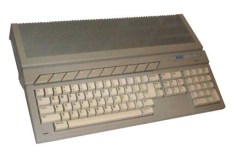
Long before the days of Logic Studio and the like, my sequencing was done on one of these. An Atari 1040 STE, running Steinberg’s Cubase – a decent sequencing programme back in the day. You just had to pray that the dreaded ‘crash’ bombs of death didn’t make an appearance on your screen, thus prompting a sudden heart-in-mouth “have I saved my work” question to rattle around in your head! All too frequently, I hadn’t.
3630 Compressor (Alesis):
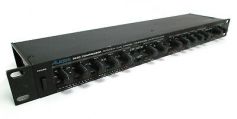
An entry level compressor which got limited use here and there, but in all honesty, it was quickly superseded by more convenient on-board digital gate / compression options bundled in with audio production software like Apple’s Logic.
A
Always Be There:
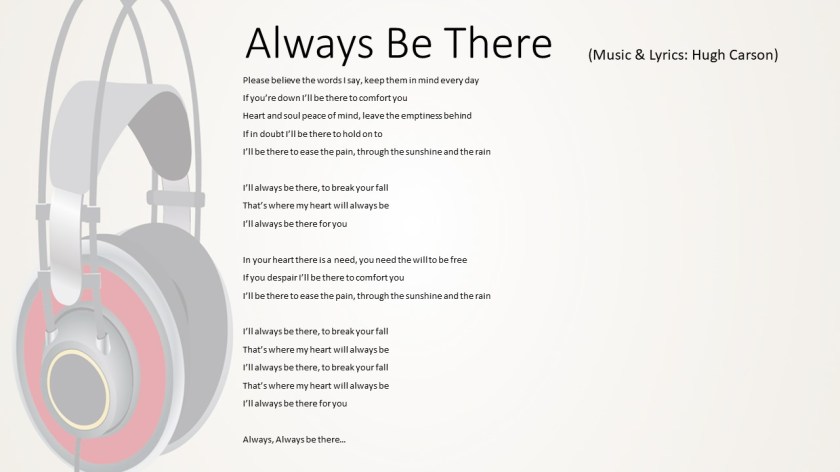
Quite an iconic song that I wrote during my time at University College Salford, which spawned two or three remixes by others as well as a further reworking by me a little later on. One of the tracks that I’m probably best remembered for in certain circles, during the mid-90s.
As, Tony:
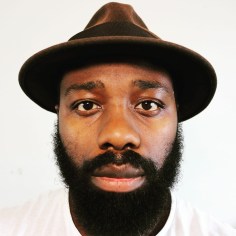
I met Anthony back in the first decade of this century when we were both working at a management consultancy in London. A laid back fella hiding a huge secret – his amazing musical and lyrical talent. Some years later I finally got to tap into this talent when he wrote and performed a section for the CGN Songs dance track, Dancing To The Tune, undeniably helping to lift that particular track to another level altogether.
Audio Restored:

Graham Joiner runs a very professional enterprise with superb personal customer service, converting and restoring old audio formats into digital files. And it’s thanks to him that my old mid-1990s DCC and DAT master tapes have finally been revived, and their contents will be slowly revealed here on the HCM site over time.
B
Banks, Donald:
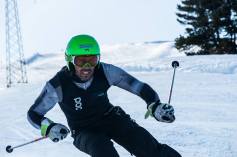
Don and I spent an inordinately large amount of time in and around the Specific Media offices at Central Saint Giles, London, back in 2012. They were massive, modern and stunning with a top floor roof garden boasting panoramic views across London, so it’s no wonder we hung out there during our days, evenings and weekends. Don was launching his charity project, GCSE’D, whilst I was beavering away in Specific Media’s purpose-built TV studio, on various video editing and music projects, one of which, in fact, was in collaboration with Don himself, the Double Piano and Glock Study. A super interesting guy, was Don. Full of internal drive and self belief. And we had a lot of in-depth chats about everything under the sun. When the Specific Media time had finally run its course, Don moved on to pursue his ultra ambitious dream of becoming a professional skier. And it was all downhill from there! Oh come on…
Bather, Mrs:
Was it Joy or Bridget Bather? I just simply can’t recall. Either way, she was my piano teacher at secondary school. She was very much from the ‘first learn the rules if you eventually want to break the rules’ school of piano teaching. This, of course, is entirely the best approach to learning any instrument, but it grated against my own yearning for a more contemporary approach to learning / playing at the time, and our teacher/pupil relationship suffered a little as a consequence, ultimately leading to me quitting piano lessons before I could tackle Grade 6. Needless to say, I should have stuck with it, but my teenage heart just wasn’t in it at that time.
Beach Boys (The):
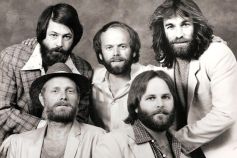
Taking a job in a record store in 1997 properly introduced me to The Beach Boys, and, to put it frankly, they absolutely blew my little musical brain apart. In fact, The Beach Boys had such a profound effect on me that I was completely unable to write any music for the next three years of my life. Instead, I opted to hop a flight to Spain to travel the country, ultimately ending up running a bar on the Costa. After all, why bother with the world of music when Brian Wilson and the boys had set the bar of achievement so high? Indeed, The Beach Boys‘ creative zenith – from 1964’s All Summer Long album through until 1971’s Surf’s Up (and arguably beyond) – remains probably the biggest musical life changing body of work that I’ve ever encountered. Doubtless, there are things that I’ve written since that have been influenced by The Beach Boys in one way or another. But there’s certainly no shame in that.
Benedetto, Carla:

It was a real surprise and pleasure to receive an email out of the blue containing an audio file a few years ago. A great friend of mine, and music teacher, Jim ‘Pasty’ Thomas, had managed to get his class to do a cover version of my song, The Moon the Stars and the Planet Mars, at school, featuring the really impressive lead vocals of young Carla Benedetto. And this will be uploaded to the site, I’d imagine, at some point in the not too distant future.
Bubble:
A short-lived, badly named university ‘super group’ of sorts, consisting of Me (keys), P.J (vocals), Nick Rundall (guitars), James Drew (drums), Jacqueline Rose (then Attwood) (sax), and someone on bass, I just can’t recall who. We threw a few tracks together including, Hair Like Brian May, and a version of Always Be There. We also performed one gig in Manchester, but in the end, it all fizzled out just as fast as it had begun.
C
Carroll, Justin:

Justin co-wrote some lyrics whilst staying with me for a few weeks in Sweden, for the CGN Songs track, Twist it Off. These were the source of much amusement, though Justin claims not to remember. I have on occasion, over the years, lifted the odd phrase or couplet from Mr Carroll’s abundant poetry stash, in order to fill a problematic gap or two in some of my own lyrical ventures.
CGN Songs:
Myself and Peter Godfrey formed a working partnership back in 2009 or so, creating CGN Songs in the process. The idea was to write, record, mix and master songs for media purposes, with a super-quick turnaround time. A sort of incidental music for media idea, only song-based, not instrumental. This led to some stupidly intense working patterns in order to meet extremely tight commission deadlines. As a rule of thumb, Peter provided the instrumental backings, whilst I wrote, recorded and mixed 90% of all lyrics and vocals. CGN Songs had some success within advertising / musical idents / sit-com pilots / songs for songs’ sake and short films. Though never officially disbanded as a partnership, CGN Songs was only truly active for about three or four years.
Caterham Summer Music School:
For a number of years in the 1980s, a week or two of my summer holidays were spent attending the summer music course at Caterham School, culminating in a big concert that was open to the general public. It was boys (and girls?) from Caterham School and girls from Croydon High School, if memory serves me correctly. Fun times.
Chambers, Chris:

Chris, Paul Webb and I formed the A Level musical ‘elite’ at school. Well, we were the A Level music students, at least. Three pretty different musical personalities, but much fun was had studying together for two years under the tutelage of Andrew Leach and Jon Hendry. Chris was – and still is by the looks of things – a super enthusiastic sort with a deep passion for music theatre, a passion that was showing some pretty healthy roots during our school years. Gunpowder Treason and Plot springs to mind. A thoroughly nice bloke, and a proper talent with it. We even formed a very short-lived ‘super group’ whilst at school. Richard Marx’s “Right here Waiting” got a re-working in our image. No known recordings exist of this event, and that’s probably just as well.
Cherry Tunes:
The fictional record label that I concocted for no apparent reason, just prior to finishing the Just Enough album. The label’s name has its roots in a certain Kool & The Gang song from the 1980s.
CMS 40 Active Monitors (Focal):
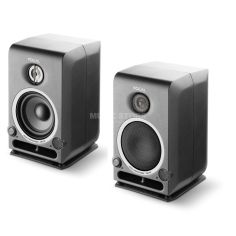
Far and away the best reference monitors I’ve ever owned. A beautifully transparent sound. These served me well from 2007 onward, or thereabouts. I would buy Focal monitors again without any hesitation.
Collinge, Ian:
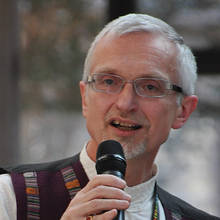
Ian was my very first violin teacher when I was just six years old. A nice guy with a beard, if I’m not mistaken. And I still remember going to his house each week for my lessons because of the yellow ‘Jesus lives’ sticker that he had on his front door. Funny the stuff that sticks with you. And it seems as though Ian’s faith and devotion has been a key feature throughout his life. Ian Collinge.
Covers Band:
In one of my gap years in the early 1990s I answered an advert in the Loot free ads paper, and joined a covers band in the Croydon area. Can’t remember much about it, not even the band’s name, and certainly nobody that was in it, but I do recall playing the sort of standard Commitments-esque bluesy-rock style stuff with a bunch of guys that were a fair bit older than I, and that it was a fun thing to be involved in at the time.
Cubase (Steinberg):
The ubiquitous sequencer software of its day that I ran for a few years on my Atari 1040 STE in the 1990s. Did anyone ever buy an original version? I only ever recall dodgy hacked copies on floppy disks doing the rounds.
CZ5000 (Casio):

The CZ5000 was the first proper synth that I ever owned. Realising that my friend, Chris Chambers, had one, it wasn’t long at all before I wanted one too. It mainly got used to create little music sketches and ditties in my teen years that I referred to as my Off The Cuff tracks. It’s lack of convincing drum or even percussion sounds – or the ability to create them for that matter – was a real negative though. Some historic synths are revered and still incorporated lovingly into modern music. Not so, the CZ5000, though it served its purpose at the time.
D
Darkness:
“…when the lights went out. Darkness, when I began to shout. All of a sudden I was left in darkness.” This was my first ever song, written (in my head) when I was about seven or eight years old? No known recordings exist of this seminal classic. NB: Despite great excitement in the industry at the time, when a brief musical collaboration was forged between myself and my cousin, Justin Reeve – following the release (in his head) of the barn-storming: They’re Closing In (what is to become of us?) – nothing ultimately came of this union, and an expectant music world was left to rue what might have been.
Dartington College of Arts:
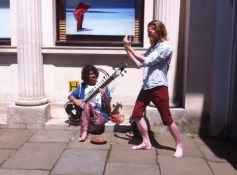
Where to start with Dartington? Despite enrolling onto a three year modular degree course (music, theatre and visual performance), I actually dropped out after year one, but I laid down a lot of long-term emotional roots in that particular sleepy, yet massively bizarre Devonian ‘educational’ retreat, and in the West Country in general, for that matter. If nothing else, it allowed me to fumble about in a proper recording studio for the first time, and it opened my eyes to a broader range of musical styles and influences, and to the peculiarities of Totnes and the ‘unusual’ folk that call it home.
DCC 170 Digital Compact Cassette Recorder (Philips):
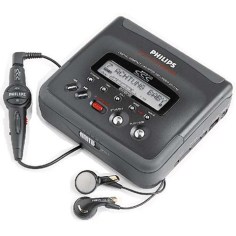
At a time of expensive DAT recorders, this portable DCC 170 Cassette Recorder – itself not exactly cheap – was a bit of a God-send, allowing me to master my own tracks digitally for the first time. It did the job, but was painfully slow in shuttling back and forth through each cassette’s contents. Of course DCC is now a totally obsolete format, and at the time of writing this, rather than paying an inflated price to buy a replacement second-hand DCC player – which will get used once then confined to stotage- in order to gain access to some of my old recordings, I’ve decided to get a professional audio restoration company to do it for me. If a job’s worth doing…
Donegan, Sean:
Much of my early output in the 1980s I would run by the discerning ears of Mr Sean Donegan. I recall one time excitedly playing a track that I was particularly pleased with down the phone to him. Bet that sounded good! Poor bugger. But Sean is not just a patient, long-suffering friend, but a talented artist too, and it was in fact he that designed both the Wayward Wolf and CGN Songs logos for my respective websites at the time.
Drew, James:
A fellow student on my Popular Music and Recording BA Hons degree course at University College Salford in the early to mid-1990s. James is a great drummer, providing the rhythm section on a couple of my tracks, as well as beating the skins in our short-lived band, Bubble.
DX7 (Yamaha):
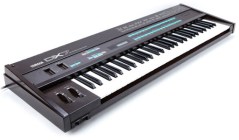
Oh how I lusted after one of these beauties as I watched Top of The Pops religiously each week during the 1980s. Ubiquitous at the time, the Yamaha DX7 represented absolutely everything that I dreamed about in music. Needless to say, I never got to own one.
E
Elliott, Rachael:
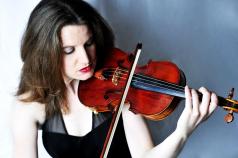
Rachael’s personal story is one of incredible achievements and a courageous spirit in the face of significant adversity, but that is her story to tell. Rachael played some great violin for me in the first decade of the new millennium, on an instrumental of mine named Mary Celesta.
Evans, Bill:
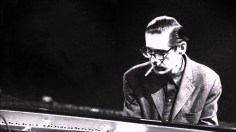
My Dad has always been a bit of a jazz aficionado, with Bill Evans one of his very favourite artists. And it was the discovery at an early age of Bill Evans’ wonderful Trio ’65 album, in amongst my Dad’s vinyl collection, that properly turned me on to him too. I think it’s probably the incorporation of impressionistic harmonies into his playing style that always most grabbed me and has had me hooked ever since. One of the true giants of jazz piano and an ever lingering influence on me.
F
Family:
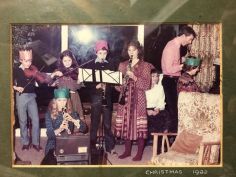
From my parents, to my sister and her family. From my late grandparents to my extended family, I’ve never had anything less than 100% support and enthusiasm from every single one of you, for anything that I’ve pursued that was in any way music-related. And for that, I thank you all, sincerely.
Fauré, Gabriel:
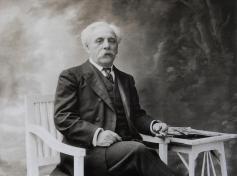
I recall as a child being aware of the theme to Radio 4’s Listen With Mother – The Berceuse from Fauré‘s Dolly Suite. I don’t know whether it was specifically the association of this piece of music with memories of my formative years, but Fauré‘s music has always resonated with me on that particular level, conjuring up images and gut-felt feelings of childhood. Unbeknown to me until many years later, it seems that Fauré, himself, saw his music very much in the same light. Elegant, gently moving and wistful music that always affects me greatly.
Firewire 1814 Audio Interface (M-Audio):
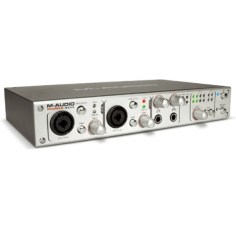
The single worst audio interface I have ever owned, hands down. A regularly temperamental little box of problems that ultimately went and fried the fekk out of the Firewire port on my old G5 Power Mac, whilst simultaneously frying itself in the process. A two-in-one shit show. And it wasn’t cheap either. Rubbish.
Flexible Films:

I met the lovely Sybil and Russ of Flexible Films through a shared contact of a friend of mine. Sybil and Russ have been doing a whole variety of film-making for many years now, and I was lucky enough to be able to supply some incidental music and soundtracks for some of the work they did in conjunction with Oxleas NHS Foundation Trust.
Focusrite Saffire 24 Pro DSP:

A lovely bit of high quality kit that got a great deal of use from me for a few years. You really can’t go wrong with Focusrite’s gear, I find.
Forgive Me:

I recall dashing back from work on the DLR one day, in a rush to ‘get down’ the nuts and bolts of this ballad that I’d been cobbling together in my head all day, before I forgot it. And I’m glad I did. I forget when the final mix was completed; potentially a few years later, but the song itself was put together one summer evening in 1997 on London’s Isle of Dogs.
Foster, David:
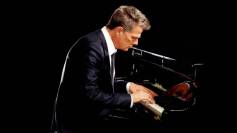
Although David Foster has been involved in projects in recent times that border on the saccharine, I’d be lying if I said that Foster wasn’t a massive influence on me with his work from the 1970s, 80s and 90s. As a session keyboard player, as a composer, as a song-writer and as a powerhouse of a producer, Foster‘s influence is enormous in the history of popular music over the last half century. Yet, so few outside of music circles even know who he is. And let’s face it, whether it’s your thing or not, even his undeniably A.O.R projects of the last fifteen years or so, are so expertly produced, it’s hard not to stand in awe of the man’s abilities and achievements. Truly a musician and producer with the Midas touch.
Funerals:
The story of my Grandad’s funeral and ‘The Organ of Doom’ is something of folklore in my family. Tasked with accompanying both the hymns and my Mum’s solo piece, I requested the chance for a very quick warm-up between the preceding funeral service and that of my Grandad. This would be no problem at all, I was informed. This was a lie. There was of course no time for a warm-up and instead I sat at the organ just as the coffin entered the crematorium hall. Unfamiliar with this organ (or any organ really, for that matter), I prepared to play the introduction to the first hymn. Now, for those of you that are familiar with the late, great Les Dawson, you’ll be familiar with the kind of a-tonal racket that was soon to follow (minus the showmanship). The organ, as it was set up, was woefully out of tune. It sounded like a tone deaf asthmatic novice with no ears playing the bagpipes. Add to this, the fact that the keyboard was not white with black notes, but brown with cream notes, and you get the picture. An absolute disaster no matter which way you paint it. How Mum got through her solo I’ll never know to this day. With no alternative, I literally pulled out all of the stops for the final hymn, and mercifully this got the organ to at least play in tune. If nothing else I turned the glum expressions of sad mourners into uncontrollable stifled giggles. Harrowing stuff for a young lad, and it’ll be no surprise therefore to hear that I have turned down every single request to play at family or friends’ important events ever since.
G
G4 Power Mac (Apple):

The G4 was my very first Apple Mac, back in 2004? Though a bit of a looker and far better – theoretically – than anything I’d owned previously, the combination of the OS9 operating system and Apple’s Logic Silver production software made my G4 experience a frustrating glitch-riddled mess. At this point, the Mac OSX operating system really could not have come soon enough.
G5 Power Mac (Apple):

This twin hard drive souped-up machine was absolutely great, and I had many enjoyable years using one of these. Its only limitations, ultimately, being its use of the soon to be put out to pasture Power PC technology. Apple’s move to Intel chips from that point on may well have offered future proofing and improved performance possibilities for their machines, but it left the likes of me with loads of expensive audio plug-ins which could then only function on the new technology if used in conjunction with some very glitchy work-around patches and solutions, hastily cobbled together by the software manufacturers. Ultimately I binned all of these plug-ins in favour of their newer, far less frustrating and way more reliable Intel-specific versions.
GarageBand:

Ten years ago, or even five for that matter, I wouldn’t have gone anywhere near GarageBand. Not because it can’t do a reasonable job in the world of audio production, but because I was a paid up member of the Logic Pro crowd. Credit where credit’s due though, in these days of cobbling together a website, GarageBand has proved to be a useful ally in editing and mixing sections of tracks together to fit my website’s brief. And should I rediscover a creative urge from somewhere in the not too distant future, maybe I’ll give old GarageBand first dibs at fulfilling that role too.
Godfrey, Peter:
Peter Godfrey is a very talented musician indeed, and although I worked intensively with him for a number of years, I only actually met the man once on a shared trip to Soho for the premiere screening of a sitcom pilot – Fuggers – that we’d written and recorded the music for. Together we formed a prolific partnership, CGN Songs (Carson Godfrey ‘Net Songs).
H
Harding, David Andrew:
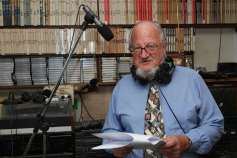
David Andrew Harding – though I only ever knew him as Andrew – was my piano and music teacher in the early 1980s at Cumnor House School in Purley. He was an inspirational character, bubbling over with energy, as well as being a terrific musician that introduced me to the whole notion of improvisation, something that has completely shaped my approach to music ever since. Outside of music, he loved CB radio (using the Raydah handle, I seem to recall), as well as being a big fan of the long-running TV series, Dallas, something that we both actually had a big passion for. In fact, he’d recorded every single episode on VHS video, he once told me. In doing some cursory research for this A-Z page, it turns out that Andrew passed on a couple of years back and that his final years were blighted by a combination of poor health, unfavourable conjecture and accusations, leading eventually to his rather sad demise. I will, however, always remember Andrew fondly, as a very kind soul with boundless enthusiasm, and a genuine passion for what he did.
Hassell, Dave:
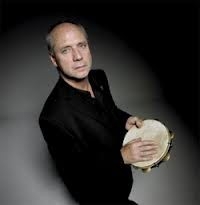
Dave was, for a short time, my Latin percussion tutor at university. Clearly a man that knew what he was doing, his sessions were pretty intense. In fact I likened them to those taken by Terence Fletcher (played by J.K Simmons) in the film Whiplash, in my Wayward Wolf Film Review – though admittedly there were fewer cymbals being thrown around in Dave’s lessons. A brilliant drummer and percussionist, Dave has played with a lot of big names over the years, though he did also once admit to having been the rhythm section on the 1980 St Winifred’s School Choir number one ‘smash hit’, There’s no one quite like Grandma.
Hasselström, Karin:
Karin, in an act of great heroism, sang the high notes (under much protestation and with a fair degree of self-doubt, it should be said), on the CGN Songs track, This Time, when my own vocal chords had downed tools, called in their union, and point blank refused to perform the necessary vocal gymnastics that were required. But Karin’s high notes were a revelation and saved the day. So, tack så mycket, Mrs Hasselström.
Hastings, Eric:
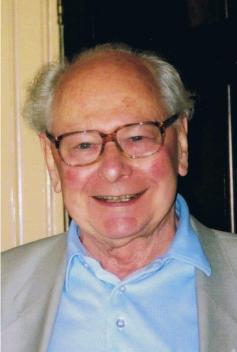
“You’ll come unstuck one day,” joked the always jovial Eric Hastings to me on seeing that I’d somehow spawned my way to an unlikely distinction on my Grade 7? violin exam. How the hell I’d managed that is indeed up there with the whereabouts of Cleopatra’s tomb and the fate of the Ark of the Covenant as one of life’s great mysteries, considering the lack of practice I’d put in for that particular examination. Teenage years. Say no more. Still, I must have done something right, and that would have been down in no small part to the brilliant Mr Hastings‘ violin tuition. Enthusiastic and passionate about his instrument, Mr Hastings‘ lessons were always something to look forward to each week, and his low pressure forgiving approach to teaching always made them great fun too. A lovely man, and a great influence on me and my love of music.
Hendry, Jon:

A smashing fella, was Mr Hendry. His lessons on music history and the study of some of the choice compositions from the various eras of classical music, were always greatly informative and most enjoyable. A highlight of the school week.
Hornsby, Bruce:
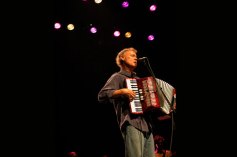
From the moment that I first heard Bruce Hornsby & The Range‘s smash hit The Way It Is – whilst on a family holiday in Italy in 1986? – I was hooked. A great piano-driven pop song with a tinge of country to it, from an exceptional debut album. And although the follow-up album was, to an extent, more of the same – well-crafted Americana-infused country-tinged melodic songs – Bruce Hornsby‘s style and musical range has ultimately been so diverse, experimental and ‘out there’ at times, that to think of him as a one hit pop song wonder – as so many do – is incredibly amusing to those of us that have tracked his incredible career over the decades. Undeniably one of the true greats of his instrument(s) and one of my many musical heroes.
Humtoo:
Some of the first pitches for commissions that I ever made were through this funny little site. The now defunct, Humtoo, was a user-generated production music library. Some of the most bizarre little projects would appear on here looking for music. From foreign cartoons to TV idents right through to big corporate advertising campaigns. A proper free-for-all and a right old bun fight for the many music creators that would subsequently lock horns and compete for them.
I
Influences (a top ten):
Bill Evans / The Pat Metheny Group / The Beach Boys / Gabriel Fauré / Steve Lukather / David Foster / Bruce Hornsby / Sergei Rachmaninoff / Stevie Wonder / Level 42.
It’s incredibly hard to whittle down a lifetime of musical influences into a small number, but these ten bands, composers, musicians or artists, probably above all others, have influenced my musical dabblings to a greater extent than any others, and each therefore has its own entry within this A-Z.
J
Just Enough:
The title of the first proper selection of songs that I deemed worthy to be called an album, including the title track itself, Just Enough. Most of the material was written on the move as I strutted my merry way around the U.S of A in 1991. Sadly, the master tapes are mere analogue C90 cassettes squirrelled away in boxes somewhere. I will unearth these assorted ‘treasures’ at some point and see what can still be salvaged.
K
KX88 Midi Controller Keyboard (Yamaha):
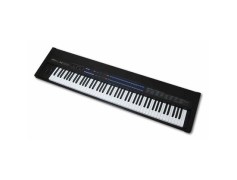
Ever since watching Level 42‘s Mike Lindup play one of these, I dreamed of owning a KX88. The King of all weighted key, full-size master keyboards. But like the DX7, it proved to be nothing more than a pipe dream.
L
Leach, Andrew:
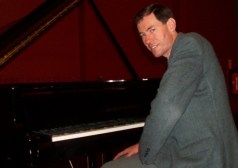
I think I must have driven Mr Leach to distraction at school. In fact, I’m pretty sure that I did. Never the most applied to my school studies, I largely failed to take advantage of the teachings of a man that was, and probably still is, an incredibly good musician. Mr Leach’s bone dry humour and Basil Fawlty-esque stature and mannerisms were always a source of good laughs for myself, Chris Chambers and Paul Webb – and I’m pretty sure he played up to the role a little too – but as the holder of the music scholarship, I really should have applied myself better to my musical school life and been more of a model pupil and less of an annoying tit. My apologies, Mr Leach. We live and learn. Some quicker than others.
Level 42:
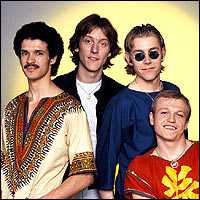
Early Level 42 was my introduction to funk, and from there I explored other artists and areas of the genre. And though I can go many months or even years without playing an LFT record, when I do, I’m right back in the zone again. They morphed into more of a song-writing outfit in later years, and whilst there are rich pickings to be had from that era, it’s really the early albums that I’m always drawn back to, and the exquisitely tight funk groove of Mark King, Mike Lindup, Boon Gould (R.I.P), Phil Gould and the man in the shadows, Wally Badarou.
Logic Silver / Pro / Studio (Apple):

Although I’d perhaps be open to alternatives these days, my adherence to all things Apple for so long meant that the many incarnations of Logic, over the years, were always my go-to production software. It’s that ‘integration thing’ you see, with all of Apple’s hardware and software fitting so seamlessly together. It’s always therefore been something of a no-brainer situation for me to keep all things Apple. Or perhaps I’ve just been brainwashed by them for too long and am only now, with the benefit of taking some time away from the studio, waking up to the devious nature of how they sometimes go about things? Certainly Apple’s immediate massive price hikes right across the board the moment the Brexit referendum result was announced in 2016, absolutely stank of opportunism and profiteering, leaving a very sour taste in the mouth. Regardless, I’ve invested a lot in them over the years and by and large they’ve always delivered. And as with all of their products, Apple’s earlier Logic Pro and Logic Studio box sets of glossy manuals and DVDs, it must be said, were things of great beauty, being as they were aesthetically absolutely stunning.
Lukather, Steve:
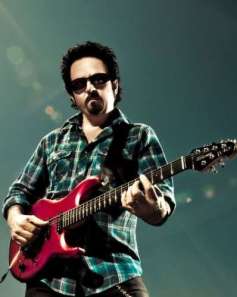
I’ve been in awe of Steve Lukather – or Luke as he’s known in the industry – for most of my musical life. Not only is he a tremendous guitarist, but he’s a proper musician’s musician. One that knows how to rein it in and play appropriately for the record in question. And let’s face it, there are few with such a skill, and there’s certainly no way that Luke – or anyone else for that matter – would ever have been so immensely successful both as a hugely in-demand and prolific session musician (from the late 70s through until and including the 1990s), and as the only ever-present member of the long-running band, Toto. Add into the mix some killer solo albums too, and you’ve got one of the most respected musicians within the industry. It’s just a shame that the ‘too cool for school’ music press have mostly been so utterly gormless with their lack of appreciation over the years. C’est la vie.
M
M1 (Korg):

Some crude studio M1 overdubs laid on top of the dry (effect-free) QY10 backing tracks that formed the basis for my Just Enough album, helped enormously to enhance that album’s sound. I believe that it was my old Dartington College of Arts friend, Chris Kimmance, that lent me his M1 pride and joy on that occasion.
Mac Pro (Apple):

I don’t remember the exact year that I owned one of these spaceships, but I did, and it was an absolute powerhouse in the studio, though not quite as quiet as I had hoped or was informed that it would be. At the time I was engaging in a lot of audio and video work which was very demanding on the processor and I think anything less than my fully souped-up Mac Pro would not have sufficed.
Mason, Jim:

Jim Mason. The only person (I think?) to walk away from our year at University College Salford with a First Class Honours degree. And thoroughly well deserved it was too. Very much an electronic musician – though occasionally surprising us with a lesser seen soulful side – Jim’s ability to combine advanced synthesizer programming skills with a strong creative streak, resulted in some really innovative compositions. I did guest vocals for Jim on three tracks (that I remember), namely: The Neural Exchange, Night Driving, and a cover version of the Alexander O’Neal hit, If You Were Here Tonight. Add to this, Jim infused his love of German Techno into a high energy remix of my own track, Always Be There. As of July 2020, I’m still on the hunt for a recording of this track.
Mayers, Phil:
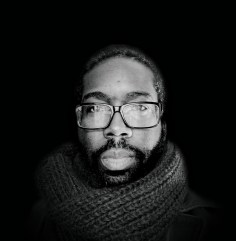
I was ready to make a very short entry here suggesting that Phil had supplied some funky guitar on my cover version of the Earth Wind & Fire monster hit, September, and leave it at that. Then it dawned on me that Phil also played some great guitar on my own track, Now Is The Time. And then it dawned on me that he had also laid down a rap for that track. And then it dawned on me that he had also supplied a sort of moody middle 8 vocal section on my song, Sanctuary. So, in fact, it’s fair to day that Phil Mayers made a really important contribution to some of my favourite tracks from the mid-90s era, which is greatly appreciated.
Moon the Stars and the Planet Mars (The):

This song has absolutely haunted me for almost a decade now. Written back in 2010 specifically for the wonderful vocals of Linnea Södahl, I had figured that it would be just a case of getting it recorded, mixed and moving on. However, the timing wasn’t great and with significant upheaval in my personal life at that time, The Moon The Stars & The Planet Mars (MSPM) suddenly became one of those songs. A considerable weight around my neck. The song that would never be finished. And despite spending innumerable hours mixing and meddling with this track over the subsequent years, I have indeed never completed a definitive mix to this day. So you can probably expect a number of versions, styles, demos and rough cuts of this song to make an appearance on my site over the coming months, and who knows, maybe even a definitive version / mix some day? Don’t hold your breath though.
N
Never Knew Love:

Rebecca Saxton sang the excellent lead vocal on this, another song which has had an assortment of treatments over the years. As it stands, the ‘definitive’ mellow version is a million miles from the original intentions that I had for it. Never Knew Love was always intended to be a sort of popular song with a country tinge to it. Whilst the piano, rhythm, sample and bass parts were relatively straight forward – as were Rebecca’s vocals – the guitar parts, on the other hand, were the equivalent of deciding to blindfold oneself just prior to taking a penalty. My good mate, Jim ‘Pasty’ Thomas, and I, arranged a recording session in Spain where he was based at the time. An obvious excuse for a quick jolly to the sunny Costa, only the rains in Spain fell mainly upon us that day, and so we ducked into a local bar for the afternoon – positioned conveniently between the train station and Jim’s flat – in order to avoid a soaking. Many hours and many beers later, we stumbled out and duly attempted the recording session. How Jim ‘Pasty’ Thomas got through that I have no idea to this day. Granted, there was some technological tinkering required in the mix process to iron out some alcoholic anomalies in his playing, but the nuts and bolts of the performance were solid enough. Various versions of this song could well seep out of the woodwork over the coming months.
Nollid, Nat:
I met Nat Nollid in a pub in Hammersmith, along with my some time vocalist, Rebecca Saxton. I don’t recall too much about the afternoon other than the fact that beers were had, but I do recall the mad demo that Nat had sent my CGN Songs partner, Peter Godfrey. Peter had then set about making sense of this rather ‘off-the-wall’ track named, Dancing To The Tune. Together, Peter and I came up with a far more mainstream dance version featuring both Rebecca and I on vocals.
NP-30 Portable Grand (Yamaha):
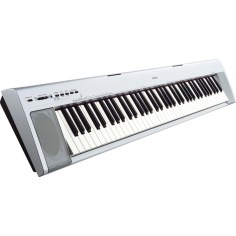
Though without the benefit of full-size weighted keys, the Yamaha NP-30 Portable Grand has proved to be a handy little keyboard to have around. Its lightweight body, built-in speakers and the fact that you don’t need to hook it up to audio interfaces / production software to get a sound out of it, all make it ideal for working quickly on ideas that might otherwise get stifled / paralysed in the technology chain of a studio environment. Not exactly a pro piece of kit, but one that better suits my current approach to music.
NT1-A Microphone (Rode):
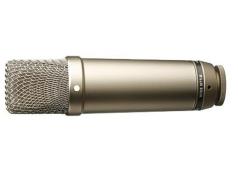
The first condenser microphone that I ever bought. I still have it and still use it from time to time, to this day. Rode truly did re-invent the microphone market making high quality equipment for unheard of prices. The NT1-A has been a great little servant for me.
O
Off The Cuff:
Having bought a second-hand Casio CZ5000 synth back in the 1980s, the musical world was my oyster! Unfortunately, the CZ5000‘s on-board sequencer and ‘drum’ options were extremely limited, but this didn’t stop me from rattling off 15-20 entire C90 cassettes worth of musical ditties that I referred to as my Off The Cuff series. Whilst each track would be at least loosely based upon a germ of an idea, each would invariably end up being some sort of crusty improvisation – hence the Off The Cuff label – which would then be layered with additional parts (drums / bass lines / harmony parts etc.). Unfortunately there was no quantisation option on a CZ5000 which meant that more often than not, the resultant ‘finished article’ would be an unholy mess. That’s not to say that there weren’t at least some tracks that I made which would stand up to some minor scrutiny, but those are probably few and far between. But true to my word of revealing at least a taste of my entire musical history, warts-and-all, I will therefore, when I can finally locate the old tapes, upload what I can of this Off The Cuff series onto the site. Hold onto your hats…
OS9 (Apple):
In my experience, OS9 was a very frustrating operating system whose frequent glitches and crashes did very little to aid productivity when attempting to run audio production software on it. A mercifully short-lived era in my creative process.
Oxleas NHS Foundation Trust:

A good Clinical Psychologist friend of mine, Paul Wilson, put me in touch with the lovely Frederica Joseph at the Oxleas NHS Foundation Trust. She was looking for someone to provide music for a project that the trust was funding. And so began my extended collaboration not just with the trust but with Sybil and Russ at Flexible films too, whose company were masterminding the project, and many subsequent ones thereafter. It was doubly rewarding to write and record incidental music knowing that its use would be for a very worthy organisation that championed both mental health and disability learning.
P
Pat Metheny Group (The):
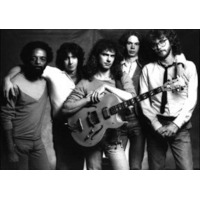
Pat Metheny and Lyle Mays’ fusion of jazz with so many other styles, has inspired me since I first played the immense As Falls Wichita, So Falls Wichita Falls album. It was then just a case of compulsively acquiring the rest of the set. Of course, Metheny has embarked upon any number of projects over the years, be they solo or collaborations with a diverse array of artists, but it’s his fusion work with The Pat Metheny Group that resonates the most with me. Both inspired and inspiring.
Personal Orchestra (Garritan):
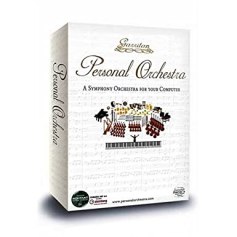
Although a little temperamental at times, this basic virtual orchestra has added some nice colour to quite a few of my compositions over the years. I’m always loathe, however, to over-expose sampled orchestral instruments in my compositions as there really is nothing worse than listening to a sampled pretend orchestra trying to emulate all facets of an actual orchestra. With virtual orchestras, less is always more.
Pianoforte:
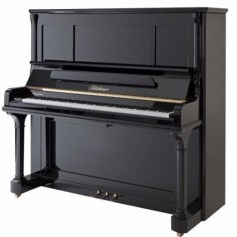
Having embarked upon learing the violin, I was convinced, a year or so later, to additionally take on the piano. It was one of the best decisions that I ever made / had made for me. Everyone should learn the piano. It’s as simple as that.
P.J. (Paul Jackson):
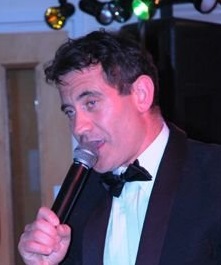
P.J really was the vocalist on our University course. I’m not saying that there weren’t others, but P.J‘s range and power made him a man very much in demand – certainly by me. I suppose you’d say that P.J‘s vocals were particularly suited to live work, but he put in some convincing shifts in the studio too, singing on a number of things for me. Notably: Now Is The Time, Always Be There and Sanctuary.
Premonition Factory (The):
My involvement with The Premonition Factory was short-lived, though I did write a couple of tracks for the outfit in the early days: Let The Heavens Shine on Me and Love Ain’t Where The Heart Is. Essentially a synth and vocalist outfit in the Depeche Mode / Pet Shop Boys mould, The Premonition Factory consisted of David Hamilton as your Chris Lowe type and John Curtis as your Neil Tennant, with me contributing on synths for a short while too during the band’s infancy. Most lyrics were written by The Premonition Factory‘s silent partner and secret weapon, Rob Wilson, who also came up with the band’s name. I know of one album which I may or may not have access to – time will tell – but whether either of my songs were amongst its playlist, I really can’t recall.
ProKeys 88 Stage Piano (M-Audio):
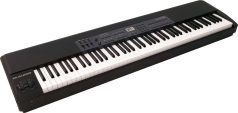
Despite weighing seven metric tonnes, this was an excellent weighted keyboard that I used in my studio in 2008 and beyond. Not one to even consider for the gigging circuit, however, unless you’re employing some seriously fit roadies. ProKeys 88 Stage Piano is an absolute tank of a keyboard. It even survived a heavy shelf (plus contents) collapsing and crashing onto it from a great height one night as I slept. Given the cataclysmic racket that that made, how I survived without having a heart attack is another matter altogether.
Q
Q25 USB / Midi Keyboard Controller (Alesis):
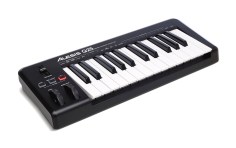
What do you do when it suddenly dawns on you that your main master keyboard possesses neither a pitch bend nor modulation wheel? You buy one of these little numbers, that’s what. A handy piece of kit particularly when on the move, and it can be directly plugged into your computer via USB without the need for audio interfaces etc.
QY10 (Yamaha):
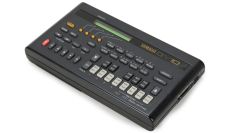
At the age of 18, I packed my rucksack and headed to the U.S. of A to fulfil a childhood dream; to travel the length and breadth of the country. It was an amazing five month experience, but within a few weeks my creative impulses felt a little starved and so I splashed out on a tiny little gadget, a Yamaha QY10 – a portable sequencer / workstation, and an absolute lifesaver for me. Though lacking an onboard effects unit, it was still very usable, and I put this little beauty through its paces and then some, composing a huge number of tracks whilst out on the road, many of which would later come to form the basis of my first complete album of songs, Just Enough, in 1992.
R
Rachmaninoff, Sergei:

Witnessing the Hungarian National Philharmonic Orchestra perform Sergei Rachmaninoff‘s second symphony at the London Proms, many years back, remains to this day one of the most awe inspiring occasions I’ve ever experienced. Rachmaninoff’s unashamedly romantic and powerfully passionate music is a continual inspiration for me.
Red Hot Music:
The job that never was! During the first decade of this century I had taken a job to pay the bills at a Management Consultancy, but then found myself stuck there for a good few years, so when the opportunity came to interview as an assistant producer in central London, at Red Hot Music (a company that produced music for adverts etc.), I jumped at the chance. It turned out that James Drew was working there at the time and had invited me in when he realised that I’d applied. Emboldened therefore (rightly or wrongly), in the belief that the job would almost certainly be mine, I was more than happy to allow for a small grace period of time to elapse whilst the company’s owner ‘sorted some things out’ and prepared the way for my imminent arrival. So I waited, and waited and waited for a job that never actually materialised, and not too long after, Red Hot Music folded.
Right From The Start:
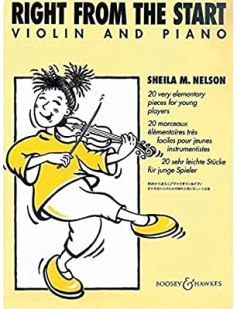
This is where it all started. My introduction to the violin came courtesy of the Right From The Start and Suzuki Method range of tuition books, though I do seem to recall that they had a different front cover back in the day.
Rose (Attwood), Jacqueline:
Jacqui (then Attwood), provided some great sax playing on a couple of things that I was involved in back in the mid-90s. Most notably, the sax noodlings on my song, Always Be There.
Rundall, Nick :

Nick is a super-talented musician and a top bloke to boot with the knack of being very proficient at most music-related things. Whereas some musicians specialise in some areas yet fall a bit flat in others, Nick covers all bases, and covers them well. He laid down some fine guitar on many projects for me over the years, including my tracks, We Changed, Forgive Me and Always Be There. But it’s his ability to be the sound engineer, the producer and the tech wizard on top of his superb musicianship and instrumental technique that really helps him stand above and apart from the crowd. In 1997 / 1998 Nick and I embarked upon a song writing collaboration together with a view to impressing some familial A&R contacts. There were rumblings of encouragement, but ultimately it didn’t work out and I took this as an opportunity to hop a flight to Spain and begin a whole new chapter in my life. Nick and I are still attempting to source the original DAT masters of River of Illusion, Easy and one or two other songs whose names escape me for the moment, but as and when we find them, there will be at least a taster of them on here, I hope.
S
S2000 (Akai):
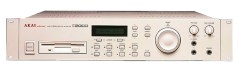
An absolute game changer. Within moments of discovering that someone else on our course – Jacqueline Rose, I think – had purchased one of these in our second year at University, myself and Nick Rundall had looked into, applied for and arranged to spend a cool £2,000 student loan on one of these, each. Though laughably lacking in ‘power’ by today’s standards, back then this marvellous little sampler – editing by numbers rather than wave forms – absolutely revolutionised the way that we would work from that moment on.
Salford, University College:

Three years of studying, writing and recording music, and a qualification at the end of it? Sounds alright to me. Of course, a degree in Popular Music and Recording is, bar to a minuscule subsection of the employment market, an absolutely pointless degree to have, let’s face it, that mattered not to me and the 60/70 others in my year group. We were there for the sheer indulgence of living and breathing music for a set period of time. This was all prior to £9,000 per year tuition fees and the ability to amass enormous debts in the form of huge student loans – student loans existed for us but were tiny in comparison with today’s amounts – so the ‘risk’ of undertaking a degree course with very little possibility of relevant future employment at the end of it, was not the risk that it would be these days. Three great years in Manchester during the time of Brit-pop, and the heydays of Blur and Oasis, and not to mention the last throes of The Hacienda nightclub. Anyone for a pint down the Black Horse? Good times.
Sanctuary:

Along with Always Be There, Sanctuary is the song that gets most associated with me (in certain circles), from my mid-90s University College Salford days. Annoyingly, the final mix suffered some SMPTE sync / timing issues in the studio and has left Phil Mayers’ excellent rap frustratingly out of time in places.
Santa Claus Is Coming To Us:
At aged nine or so I penned my school’s Christmas carol / song competition winner, Santa Claus Is Coming To Us. Though the song was my idea and some of my initial half-baked scribblings were indeed used, the truth is that my music teacher, David Andrew Harding, ‘assisted’ me greatly in realising my festive vision. There, I’ve said it. For years my ‘wind-assisted’ winning of this prestigious award has weighed heavily upon me, and it’s certainly now a load off my mind to finally come out and reveal my dirty secret. Altogether now: “Santa Claus is coming to us, dressed in white and red. Up above the children’s houses whilst they sleep in bed…”. Bloody genius, that.
Saxton, Rebecca:
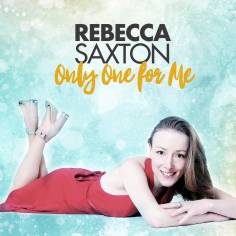
Rebecca Saxton has the loveliest pure voice that is both versatile and affecting. I think we met through Rebecca’s friend, Nat Nollid, many years ago in Hammersmith. For a period of time between 2009 and 2014, or so, Rebecca sang on a few things for me, including the main vocal part on Never Knew Love, as well as backing vocals on the dance track, Dancing To The Tune and the wistful ballad, Now The Summer’s Gone.
Södahl, Linnea:

About a decade ago, I observed Linnea Södahl, her sister and a cellist, busking in the Gamla Stan of Stockholm. They were sensational, and very kindly Linnea agreed to sing on one of my songs, The Moon the Stars and the Planet Mars, which we then recorded in a church in Stockholm in 2011. Linnea is a ridiculous talent who has since (nothing to do with me, I should add), gone on to become an extremely successful song writer. The massive Zara Larsson hit, Lush Life being amongst her portfolio of stand-out work.
Spectrasonics:

Spectrasonics make great audio plug-ins, they really do, and if you’ve watched any U.S TV dramas over the last ten years or so, you will have unwittingly heard hours of Omnisphere-soaked incidental music. This and their very excellent Trilian bass audio plug-in formed the basis of so much of my work from about 2010 onwards.
Suzuki Violin School:
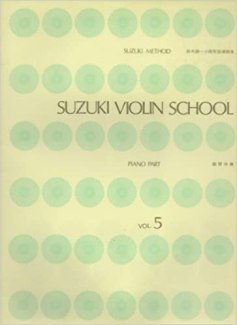
Along with the Right From The Start books, the Suzuki Violin School method shaped mine and millions of others’ entries into the world of violin.
SY85 (Yamaha):
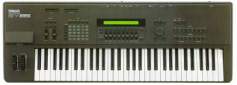
I may have missed the Yamaha DX7 boat, but my acquisition of a Yamaha SY85 more than made up for this. I absolutely loved this machine, and it was only really an eventual internal battery malfunction combined with some major changes in my life circumstances that ultimately led me to sell it on. It served me both as a midi controller keyboard and as a self-contained workstation in its own right. There are floppy discs galore in existence somewhere onto which I have saved umpteen Yamaha SY85 projects over the years. Lord alone knows where though, or how I’d ever now access their contents were I ever able to locate them.
T
Thomas, Jim ‘Pasty’:
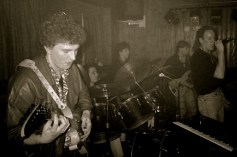
Be it the Just Enough Dartington recordings, the inebriated Never Knew Love noodlings, or The Moon The Stars & The Planet Mars sessions at Specific Media Towers, Simon, James, Jim, ‘Pasty’ Thomas has been laying down his own brand of considered Cornish left-handed rock riffery for me for nigh on thirty years now. And, who knows, there may still be more to come…
V
Vendredi Soir:

The Vendredi Soir boys have been my footballing crowd since 1997. Barely a crumb of music trivia knowledge escapes this gang of ultra-liberal audiophile anoraks. They’ve introduced me to – and filled in the blanks in my knowledge of – any number of bands and acts over the years. Despite time’s relentless march, they’ve also somehow remained reasonably current and up-to-date in their music tastes, something I certainly can’t say for myself these days. Every Friday – Covid-19 allowing – is seven-a-side football night for The Soir, followed by an exhausted couple of ‘recovery pints’ down at The Old Fountain pub in Old Street. Good times.
Violin:
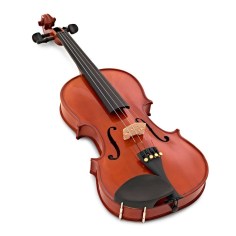
At the age of six, I asked my parents if I could learn the violin. They agreed, and the rest is history. Why the violin, you ask? I honestly can’t remember, but it was the first step along my merry way into the world of music.
W
Wayward Wolf:

I’m not entirely sure why I eventually settled upon the Wayward Wolf identity to pursue my music and media goals back in the late Noughties. I think it was a blend of my enduring love of Jack London’s wonderful novel, The Call of the Wild, and Neil Jordan’s magnificent 1980s gothic fantasy horror, The Company of Wolves that gave rise to the Wayward Wolf phenomenon. Either way, it had a ring to it, and Sean Donegan‘s fine logo certainly gave the brand a strong identity. The idea was to supply both music for media and songs for bands and singers, as well as offering video production and editing services. It was quite a hefty workload which kept me insanely busy for two or three years whilst simultaneously resulting in the break down of any semblance of relationships or social life that I had had. The sacrifices we make, hey? Broken personal relations-aside, the Wayward Wolf era represents easily the most productive part of my life in terms of creativity and success, something that I remain very proud of to this day. I continued to identify through the Wolf for some years after its heyday, though never again was I to be anywhere near as prolific in my output. In more recent times, the Wayward Wolf name has become more synonymous with my film reviews. Between 2014 and 2019 I reviewed every single film that I saw on the big screen; sometimes as many as 80 visits per year. That’s small change to the Mark Kermodes of this world, but a decent effort for a part-time film anorak such as myself. I enjoyed plenty of press screenings and some reasonable success here and there, and even the occasional thumbs up and acknowledgement from actors, directors and other film professionals, but with the relentless march of the insufferable woke progressive agenda infiltrating most aspects of Hollywood and the industry in general these days, I gladly called a halt to my endeavours in July of 2019. There are, after all, only so many times you can write the same frustrated / scathing review. The legacy site still exists though, and can be found here: Wayward Wolf Film Review.
Webb, Paul:
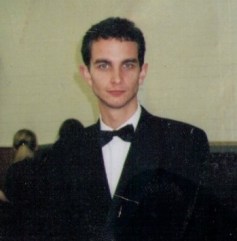
Paul Webb was great fun. An extremely talented, fairly highly strung fella that induced much laughter from his peers during our school days. Whereas most youths in the 1980s would be souping up their Ford Escorts or Capris, and blaring out some form of loud Pop or Rock music as they burned around Britain’s many one-way systems, Paul did things a little differently. Haring about in his Austin Mini, he’d be on the receiving end of prolonged stares at red traffic lights as the strains of Sergei Rachmaninoff (and the like) would bleat out through his open window; Paul conducting an imaginary orchestra in an animated fashion at the same time, I should add. His musicianship was superb and his piano playing was greatly superior to mine, and indeed that of all others of his age group at school too. I lost touch with Paul after school, though I used to get occasional updates from our mutual good friend, Justin Carroll, who told me of the increasingly bizarre twists and turns in Paul’s life. Never a dull moment, that’s for sure. I crossed paths with Paul once again – and for what would in fact prove to be the final time – in 1999, when he stopped by at my bar in Torrox Costa in Spain, and a fun old evening was had. Taken from us far too soon. Rest in peace, Paul Webb, you talented nutcase.
Webber (Waddington), Sarah:
Lovely Sarah and I used to listen to music together in our Dartington College of Arts days, and she provided some fine backing vocals for me on a cut from my Just Enough album. Namely, Time Starts Things Over Again.
Wentzel, Lauren:

Lauren was ‘the voice’ of Wayward Wolf. Well, she did a great Wayward Wolf voice-over session for me once, anyway, which spared the world having to listen to me do it.
West, Gareth:
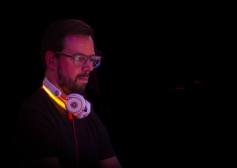
An impromptu teenage ‘jam session’ with my old mate, Gareth West, threw up a couple of dubious tracks that will, for the benefit of society, almost certainly never see the light of day, leaving Jack to the mouth organ (do the what?) and Fine Breasted Lady to be forever confined to the audio vaults of time. The stuff of urban myth and legend.
Whipp, Steve:
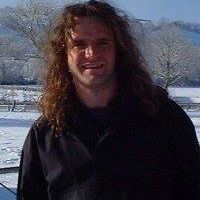
I lost touch with Steve Whipp after our school days, but I finally got back in touch with him in 2014. We’d arranged to meet up again, but circumstances didn’t allow on that occasion. Little did I realise that that would be the one and only opportunity to have rekindled and old friendship, as tragically Steve passed away in 2015. Back in 1985, Myself, Steve, Phil Baldwin and Alex Collingridge had formed a band, Wild West. Though Steve was a bit of a novice guitar player at the time, he played his Flying V with pride and you could just tell that this fella was a rock guitarist in the making. He lived and breathed Iron Maiden, Def Leppard, Bon Jovi and the like. I wish I’d stayed in touch more with Steve because one undeniable fact was that this laid back genial rock God was an absolutely lovely fella. A fact proven beyond doubt by the gushings of love that still pour out for him, in remembrance, on his Facebook tribute page.
Wild West:
Waiting for the Night, Now You’re Gone, and of course, the never-to-be-forgotten anthem, Brooklyn (where your dreams are real). The unmistakable songs and sounds of Wild West. We lined up as a sort of teenage fab five: Steve Whipp on guitars and vocals, Alex Collingridge also on vocals, Phil Baldwin on Guitars, Dave Hamilton on keys, and yours truly on drums – Yes, drums! ‘Rehearsing’ in Steve Whipp‘s garage, our future path to glory was mapped out and clear. Incredibly, the glory didn’t happen, but we did once purchase a full drum kit through the Loot free ads paper, and proceeded to carry the damn thing back in pieces, cymbals and all, on London’s tube network! So, Swings and roundabouts and all of that. And as with all expensive prize possessions, we then did the sensible thing, grabbing a pair of drumsticks and smacking the living daylights out of a variety of sachets of McDonald’s dips, all over the kit, customising its ‘look’ somewhat in the process. A right gang of nuggets, if you will. Wild West‘s shelf life was short but the ride was kind of sweet, and despite a proposed off-shoot of the band – by the name of Skyline – being mooted for a while when creative differences were beginning to mess with band cohesion, it ultimately came to nothing, and the whole project was shelved while we were still at our creative ‘peak’. You all know the old saying: “Always leave them hungry for more.” Well, in the case of Wild West, the listeners had already eaten a seven course meal, and having heard us, were now ready to vomit.
Wonder, Stevie:
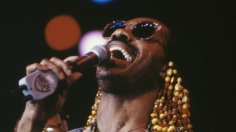
Stevie Wonder, to my mind at least, will never be bettered in the world of ‘black music’. His fusion of funk, soul, song-writing ability and more classical Western musical sensibilities, has always placed him head and shoulders above any others that might share his musical genres. The man is a living genius, and I never use that word lightly. And what a mind-bending body of work to look back on. Though Fulfillingness’ First Finale remains my own personal favourite, it really is a take-your-pick of one from any of the albums that blew people’s minds for a decade or so. From 1971’s Where I’m Coming From right through to, arguably, the last of the great albums, 1980’s Hotter Than July. The sheer consistency of quality of that work was beyond remarkable. Who isn’t inspired and influenced by Stevie Wonder? I know I am.
 Hugh Carson Music